
Event licensing and planning, handled.
Every event needs the right approvals before it can be built. We guide clients through licensing, planning and safety sign-off, whatever the idea or the site.
We work directly with local authorities, Safety Advisory Groups, police licensing teams and landowners to get events consented and ready to run.
Who we do this for
Event founders and investors
Turn a site and an idea into an event that can legally open.
In-house event teams
Specialist support for a licence, a planning route or a Safety Advisory Group.
Landlords and landowners
Agree the terms and conditions that let an event use your site.
Councils and event teams
Clear, well-prepared applications and plans that are easy to assess.
Events we have taken through approval
- Festivals
- Christmas attractions and winter light trails
- Large-scale city cultural events
Our approach
How do you get your event licence?
By engaging early with the people who decide. Your local authority grants the licence, but the responsible authorities, the police and the residents who live near your site all have a say.
How much engagement you need depends on the size of what you are doing. We meet them, listen and understand their concerns, then build the feedback of the responsible authorities, the police and the Safety Advisory Group into the plans before the licence is submitted.
We propose conditions and show example plans, so the application goes through with the best possible outcome.
The earlier we start, the better the result. We recommend at least 8 weeks of engagement before submission.
What we handle
Licensing strategy
We work out which approvals your event actually needs, whether a premises licence, a Temporary Event Notice or operating under an existing site licence, and build a realistic timeline around it.
Applications and consultation
We prepare and submit applications, manage the consultation period and respond to any representations.
Safety Advisory Groups
We prepare the event management plan and supporting documents, present to the group and answer its questions.
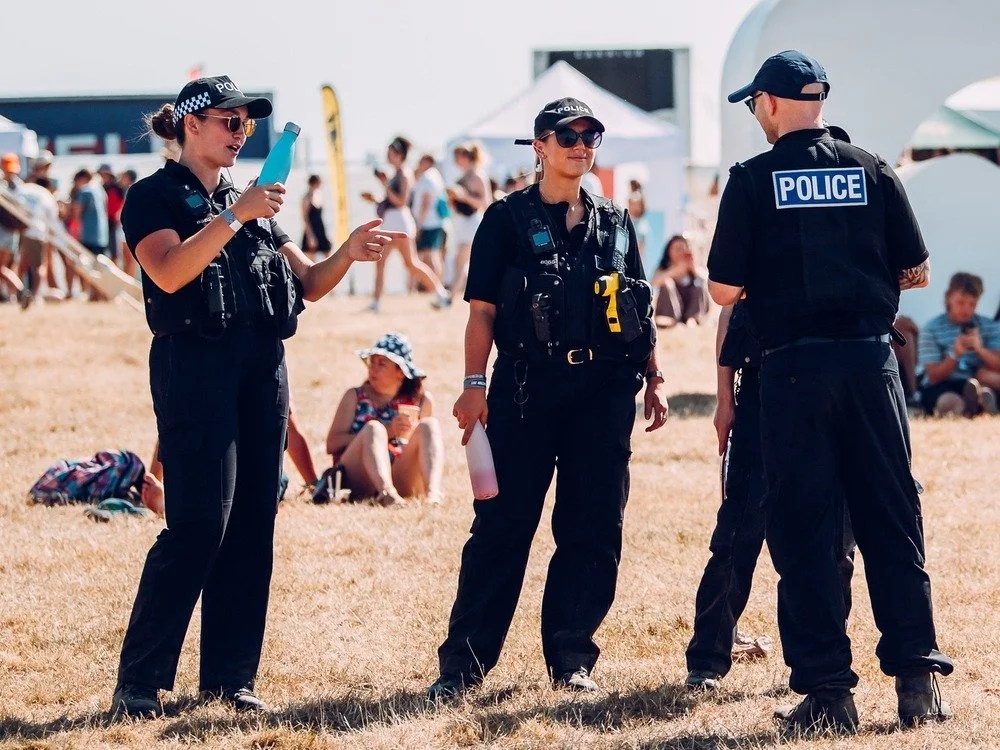
Police licensing teams
We engage early so concerns are addressed in the operating plan before they become objections.
Planning
We review the planning position for your site and the temporary structures you intend to build.
Landowners and venues
We agree the terms and conditions that let your event use the site.
Conditions carried into delivery
Licence conditions only matter if they are followed on the day. We build them into the operating plan and the production itself.
How it works
Site and concept review
We look at the idea, the site and the audience you expect.
Approval route
We set out the licences, permissions and timeline your event needs.
Documents
Event management plan, risk assessments, site plans and supporting policies.
Engagement
At least 8 weeks of meetings before submission with the council, responsible authorities, police, Safety Advisory Group and landowner, building their feedback into the plans.
Representations and hearing
We meet anyone who did not engage at first. If there is a hearing, we attend it, working towards securing the licence.
Licence and delivery
Approvals secured, conditions built into how the event runs.
Common questions
How long does event licensing take?
The longer the lead time the better. We recommend a minimum of 8 weeks of engagement with the local authority before a licence application is submitted, and more for larger events. Once an application is in, a premises licence has a 28-day consultation period.
What is a Safety Advisory Group?
A group brought together by the local authority, typically including the council, police, fire and ambulance services, that reviews event plans and advises on safety. It does not issue licences itself, but its view carries real weight with the licensing authority.
Is a Temporary Event Notice the better route for a smaller event?
For events with fewer than 500 people at any one time, including staff, a Temporary Event Notice is often the best route. It is quicker and simpler than a premises licence. In England and Wales it covers an event of up to 168 hours and must be given at least 10 clear working days before the event. Larger events need a premises licence. We will tell you which suits yours.
What if the police or council have concerns?
We talk to them early, understand what is driving the concern and address it in the plans, so issues are resolved before they become formal objections.
Can you deliver the event as well?
Yes. We can take an event from approval through to on-site delivery, or work alongside your own team on the licensing and planning. Either way, we are there to make it as easy as possible.
Does my event need planning permission?
Think of a pub. You can have the idea and sign for the site, but that does not mean you have permission to build the pub. That is planning, and it comes before licensing.
As a general rule in England, land can be used for temporary events for up to 28 days in a year without planning permission, and those 28 days include the build, the live period and the take down. If you need the site for longer, or it is within the curtilage of a listed building, you will need planning permission. It is always worked through with the council's planning team.
What is an event licence, in plain English?
Back to the pub. Owning the building does not mean you can sell alcohol, put a band on or serve late-night food and drink. The licence is that permission, and it comes with conditions: what time you can open and must shut, who can be there and whether children are allowed, how loud the music can be, your capacity (staff included) and your search policy.
Can you lose your licence?
Yes. If you serve underage customers, break your noise limits or do not do what you said you would in your plans, the licence can be reviewed, changed or taken away. A pub that cannot sell alcohol has no business, which is why we build the conditions into the plan from the start.
What is Martyn's Law?
It is the Terrorism (Protection of Premises) Act 2025. It will require venues and events that can hold 200 or more people, staff included, to have procedures to protect the public, with more detailed duties from 800. It is new to the industry, so if you are unsure what it means for you, get in touch and we will happily talk it through.
Does any of this sound confusing?
It is a lot, and that is completely normal. Underneath it, the order is simple: the idea, the site, planning, then licensing. This is the work we do, which is why we always recommend talking it through early.
Tell us about your idea and your site, and we will happily set out the route in plain English.